Most of Hire Bloom's talent pool is made up of BYU-Pathway students and graduates. Here's what that program is, why it matters, and what it means for the people you hire.
When companies ask about the quality of Hire Bloom's talent, there's one topic that comes up more than any other: BYU-Pathway.
It's a name that gets mentioned in nearly every conversation about why Hire Bloom team members perform and stay the way they do. But what exactly is BYU-Pathway? And why does it matter for the people you hire?
What Is BYU-Pathway Worldwide?
BYU-Pathway Worldwide is an online education organization that provides access to fully accredited degrees and certificates through BYU-Idaho and Ensign College. It was built specifically to reach students who thought a college education wasn't possible—people in emerging markets, working adults, parents, and first-generation college students who needed something flexible, affordable, and real.
The program now serves nearly 89,000 students annually across more than 180 countries. Today, 68% of students live outside the US, with the largest enrollments in Nigeria, Ghana, the Philippines, Brazil, and Mexico. The degrees are regionally accredited and awarded by BYU-Idaho and Ensign College, and are built around today's in-demand fields: business administration, communication, software development, information technology, and more.
Every course is taught and conducted in English. That's not incidental—it's structural to the program's design.
According to BYU-Pathway's own data, 90% of graduates get a better job after earning a bachelor's degree, and 70% see improved outcomes after earning their first certificate. 85% of students are employed at graduation. These aren't students coasting through an easy online program. They're working hard—often while managing jobs and family responsibilities—to build something real.
These Students Work for Hire Bloom
The majority of Hire Bloom's talent pool is made up of BYU-Pathway students and graduates. 74% of Hire Bloom team members hold a US college education—the result of sourcing deliberately from this pipeline and vetting carefully within it.
That vetting matters. Only about 9% of applicants who come through Hire Bloom's review process are approved. Every candidate completes a live English assessment, a home office verification, a background review, and multiple rounds of interviews. By the time someone reaches your interview process, they've already cleared a significant bar.
It's worth noting: BYU-Pathway explicitly partners with social impact staffing companies to connect students to remote jobs that offer a sustainable living wage—helping students find work while they're still in school, not just after graduation. Hire Bloom is part of that ecosystem. The pipeline is intentional on both sides.
Why This Background Produces Different Outcomes
Sometimes, when we chat with clients about our talent, they are worried about hiring someone with less "experience." They're worried that our approach to working with BYU-Pathway (who are often first-generation college students) runs counter to the usual hiring logic.
When companies say they want an "experienced" candidate, what they usually mean is: they want someone who can do the job well, quickly, and stick around. Experience is a proxy for those things. But it's not always the best one.
Our BYU-Pathway students may come in with less industry experience than a candidate who's been working in a call center for five years. That's actually part of what makes them different and makes them exceptional.
Hire Bloom team members may not have spent years adapting to someone else's systems and someone else's way of doing things. They're earlier in their careers, which means they're genuinely invested in building skills, in making an impression, and in growing within a single role. For many of them, this is their first meaningful remote job. It means something to them in a way that's hard to replicate with a more seasoned hire who has plenty of options.
The data reflects this. Hire Bloom's first-year retention rate is 70%—compared to retention rates closer to 30% with local hires and the revolving door that characterizes most traditional BPO environments. Part of that retention story is geographic: these team members don't live in markets where they can jump from one company to the next. But a bigger part of it is motivation. They chose this. They worked for it.
Andy Iacona, VP of Customer Service at Balance of Nature, put it plainly: "My retention model for Bloom individuals is nearly 90% in a call center environment. That's remarkable."
Hire Bloom Team Members are Coachable and Motivated
BYU-Pathway students are, almost by definition, people who chose the harder path to get an education. They balanced coursework with work and family obligations. They showed up to weekly virtual or in-person gatherings, met deadlines across time zones, and earned credentials one certificate at a time. That kind of track record tells you something about how someone shows up on the job.
Matt Loxley at Best Choice Roofing described our talent like this: "It's a breath of fresh air to interview someone who actually wants a job."
There's a reason Hire Bloom was built around this talent pool specifically. Our co-founders, Eric Engebretsen and John Pearce, spent years in international education and hiring before starting Hire Bloom, and what they kept seeing was the same gap: talented, educated people in emerging markets who couldn't access the kind of work that matched their skills.
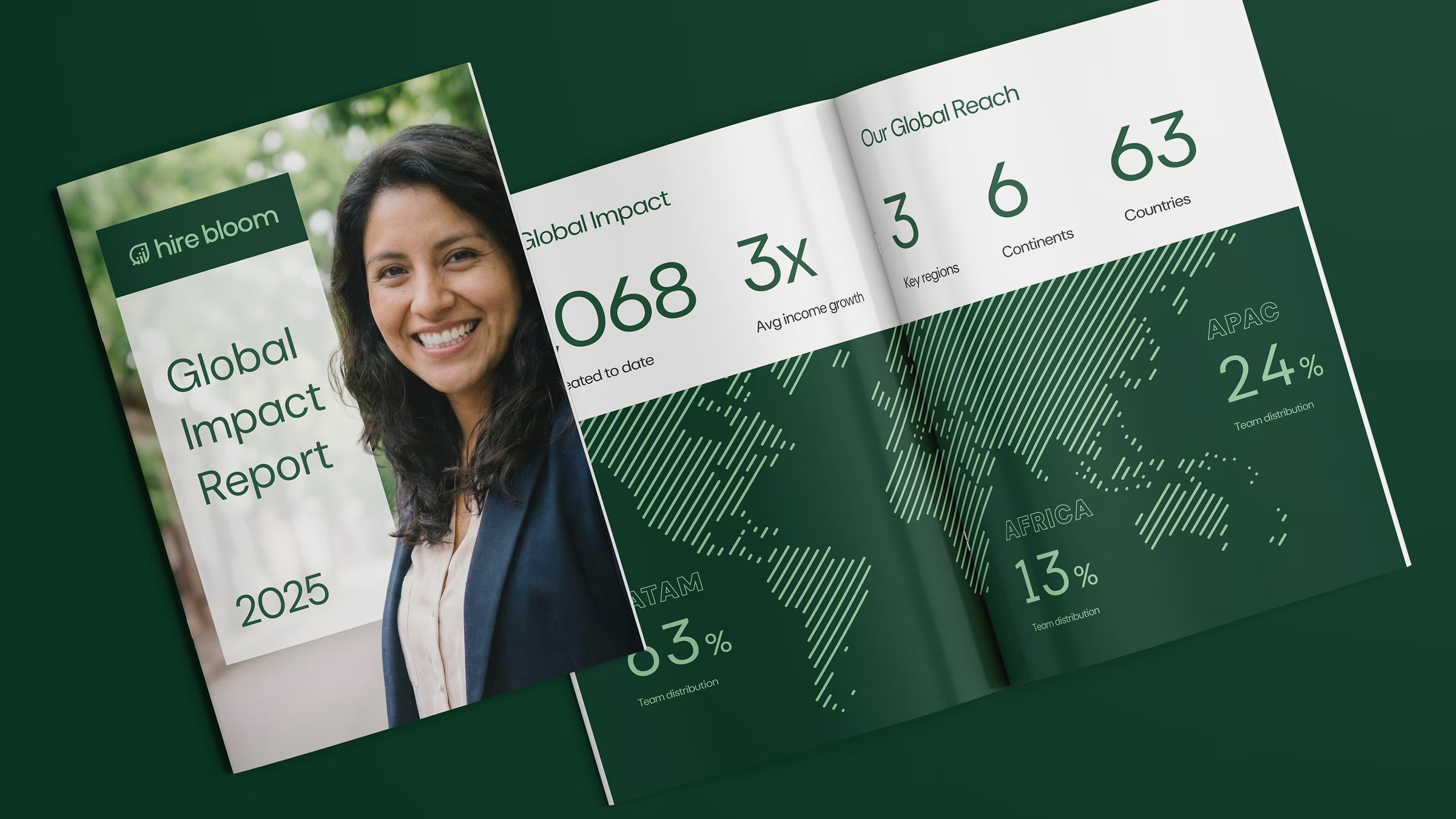
BYU-Pathway is closing that gap on the education side. Hire Bloom is closing it on the employment side. We've already helped create jobs for over 8,000 deserving people in emerging markets—and that number is growing.
You can download our latest impact report here or interview some of our team members for free to see if they're a good fit for your company.
.png)

.avif)